10 Mind Blowing Space Facts
Space is absolutely wild, and I find that the more you dig into its details, the more it keeps surprising you. From planets that rain glass to stars heavier than anything our minds can picture, the universe constantly throws curveballs at what we thought we knew. After plenty of reading and chats with fellow stargazers, I’ve pulled together my favorite space facts that always blow my mind, and usually get people talking, too.
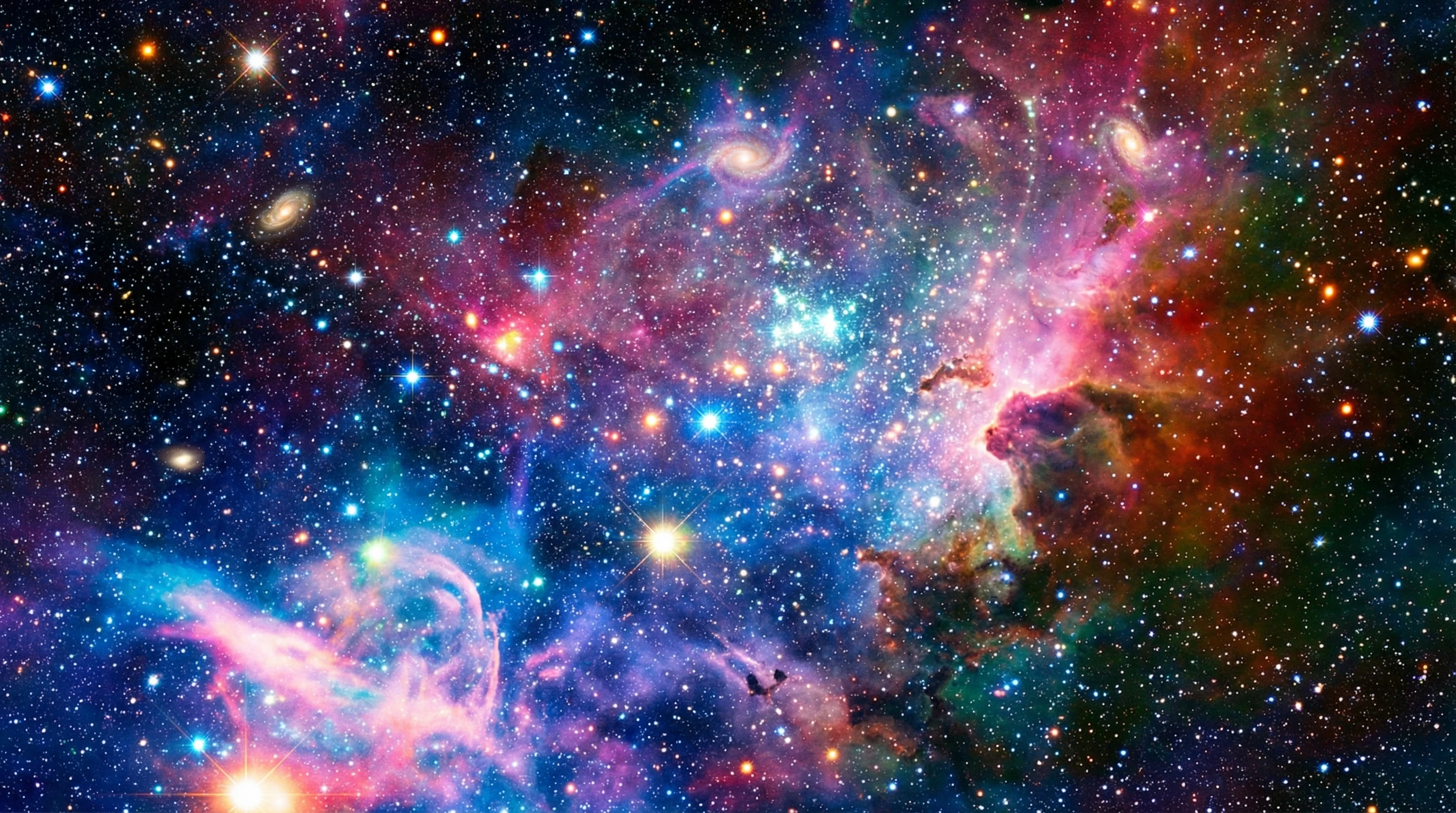
A Quick Overview: Why Space Continues to Wow Us
Space isn’t just a collection of distant lights. It’s a never-ending playground for weird, extreme, and sometimes almost unbelievable phenomena. New findings pop up regularly thanks to powerful telescopes, space probes, and even brilliant mathematicians working on unique theories. The more we explore, the weirder it gets, which honestly is my favorite part! Space challenges some very basic ideas: what a “day” is, how “water” can behave, and where gravity actually works. Some scientists think most of the universe is still a big mystery, with only about 5% of the stuff out there being the “normal” matter that we can study and get a handle on.
10 Mind-Blowing Space Facts That Still Shock Astronomers
- 1. Neutron Stars Are Super Dense: If you scooped just a sugarcube sized amount of a neutron star, it would weigh about a billion tons. When stars go supernova, their core collapses into something so dense that electrons and protons merge into neutrons. A teaspoon of this matter on Earth would crush everything in its path.
- 2. Space Isn’t Completely Empty: Even in the deepest black voids between galaxies, space isn’t a true vacuum. There are still stray atoms, light waves, and bits of cosmic radiation zipping around. It’s just a lot less than what’s in our own solar system.
- 3. There’s a Planet Where It Rains Glass: The exoplanet HD 189733b is famous because its winds whip glass shards sideways at thousands of kilometers per hour. If you ever need a mental image of a planet you’d absolutely want to avoid, this is it.
- 4. Mars Has the Tallest Volcano: Olympus Mons on Mars rises about three times higher than Mt. Everest, making it the solar system’s biggest volcano. Gravity on Mars is lower, and the way plate tectonics work there is different, allowing the volcano to grow much larger than anything on Earth.
- 5. A Day Longer Than a Year? Venus rotates so slowly that its day (about 243 Earth days) is actually longer than its year (roughly 225 Earth days). So if you lived there, you’d get fewer sunrises each year than birthdays. That would make for a truly strange calendar.
- 6. Rogue Planets Just Drift in Space: Not all planets stick to orbiting stars. Rogue planets float alone in the galaxy, either booted from their original systems or formed in isolation. Scientists think there could be more rogue planets than stars, which is kind of mind-blowing.
- 7. The Sun Makes Up Over 99% of the Solar System’s Mass: Almost everything in our solar system, by weight, is part of the Sun. Every planet, moon, comet, and asteroid added together makes less than 1%. Soaking in some sunshine really does put you right next to the heavyweight champ of our cosmic neighborhood.
- 8. There’s an Enormous Water Reservoir Out There: Astronomers found a giant cloud of water vapor about 12 billion light-years away. This cloud holds 140 trillion times the water in all Earth’s oceans combined. It orbits a huge black hole and offers key insights into galaxies and cosmic formation.
- 9. The Largest Known Diamond Is in Space: A white dwarf star called BPM 37093 is essentially a ten-billion-trillion-trillion-carat diamond. Nicknamed “Lucy,” it’s the crystallized heart of a once-shining star, a real gem out in the universe.
- 10. Black Holes Can Slow Down Time: The closer you get to a black hole, the more time slows for you compared to someone farther away, thanks to “time dilation.” It’s not just science fiction. This has been confirmed by Einstein’s theories and even by clocks ticking at different speeds on Earth depending on altitude.
Space Oddities Worth Knowing
Astronomy isn’t all about planets and moons. The universe is packed with oddballs and rare sights that often puzzle astronomers. These strange phenomena are a blast to learn about and show just how different the cosmos can be from our daily experiences.
- Dark Matter and Dark Energy: Most of the universe (about 95%) is made of stuff we can’t see or directly measure, called dark matter and dark energy. They shape galaxies and speed up the universe’s expansion, but nobody’s actually seen them yet! Their effects show up through gravity’s tug or the way galaxies move, but their actual makeup is still a puzzle.
- Pulsars: These are spinning neutron stars that send out radio waves in regular pulses, like space’s own lighthouse. Some spin hundreds of times each second and serve as some of the universe’s best natural clocks.
- Space Is Not Far Away: Technically, the edge of space starts about 100 kilometers (62 miles) above Earth’s surface at the Kármán line. If you could drive straight up, you’d get there in around an hour.
- Total Solar Eclipses Fit Just Right: The moon is about 400 times smaller than the sun, but also 400 times closer. That allows it to perfectly block out the sun during an eclipse. Not many planetary systems have this kind of cosmic luck.
How These Facts Got Discovered
Space knowledge isn’t built on wild guesses. It comes from years of detailed science, expensive missions, and sometimes a bit of good fortune. Most of what we know comes via telescopes, orbiting observatories, space probes such as Voyager or Juno, and amazing tools like the Hubble Space Telescope. By snapping images, analyzing light from distant stars, and heavy-duty number crunching, astronomers can figure out everything from a planet’s wind speed to which elements make up far-away galaxies.
For instance, the discovery of neutron stars came after a lucky find of pulsars in radio telescope data. That wild glass-rain on HD 189733b was noticed by tracking how starlight dimmed and shifted when the planet passed in front of its star, followed by studies on its atmosphere and wild winds. There’s still plenty more waiting to be found as new tools are developed and launched into space, making every discovery just the tip of a vast cosmic iceberg.
Common Space Questions From Curious Minds
Question: Are there any new planets being discovered?
Answer: Absolutely! Astronomers are always tracking down new exoplanets. Most look nothing like Earth and come with quirks (wild weather, odd orbits) that seem straight out of science fiction. Check out resources like NASA’s Exoplanet Exploration page for the latest numbers and cool facts.
Question: How do scientists find out what’s inside a planet or star?
Answer: Most of the time, astronomers use spectroscopy, which is like examining a barcode made of light. By splitting up light from a planet or star, they can see patterns left by different elements. Sometimes, space probes fly nearby and measure directly, collecting samples or using radar to peek beneath the surface.
Question: How much of the universe has been explored?
Answer: Almost none! Most of the universe remains way beyond our physical reach. We’ve sent robots to the far edges of our solar system, but even Voyager 1, the furthest human creation, has just barely left our sun’s neighborhood. Our efforts so far have only started to scratch the surface.
Tips For Learning More About Space
If you’re fascinated and want to keep chasing more space facts like these, there’s plenty you can do even without your own telescope. I always recommend checking out local astronomy clubs, free online videos, space news apps, and stargazing tools you can load right onto your phone. There are many free sky maps (try Stellarium or SkyView) that will point you to planets, constellations, and special sights like meteor showers.
Reaching out to observatories or planetariums nearby is a fantastic way to get hands-on experience. Many of them hold public nights where you can look through huge telescopes or hear from real astronomers in person. Sites such as NASA, HubbleSite, or Sky & Telescope magazine constantly update with discoveries and offer great resources for space fans at every level.
Checking in on the latest space discoveries helps you keep perspective and keeps the curiosity alive. Every new thing we learn about the universe makes our own planet feel a little more precious—and just a bit more mysterious, too!